Loading...
First Round of Abstract Submission Ends: Dec 31, 2026
Extended Early Bird Ends: Apr 28, 2026

Keynote Speakers

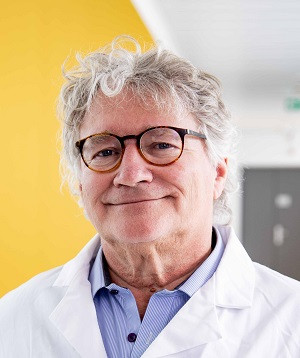
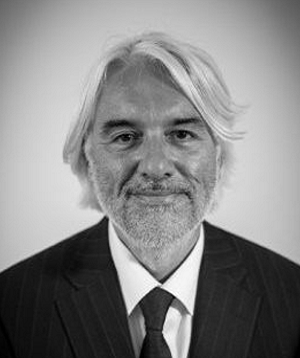
Prof. Alain R. Thierry
Université de Montpellier, France
Title: Liquid Biopsy: from Biology to clinic
Following pioneering works on gene therapy solutions for cancer and HIV and on DNA auto-organization complex formation in the US (Georgetown Lombardi Cancer Center, Washington DC; and NCI, Bethesda, Prof RC Gallo, chief), A.R. Thierry’s contributed to circulating DNA (cirDNA) implementation in clinic and basic research, especially in oncology. In particular, his work at the IRCM-INSERM (Montpellier, France) where he leads the “Biomarkers for Precision Oncology” team, focused on the structure, origins and function of cirDNA. He also coordinated studies on the clinical validation and the clinical utility in using cirDNA analysis. He has pioneering works on cirDNA fragmentation, and proposes potential solutions towards cancer screening with using fragmentomics. He now conducts research on the impact of neutrophil extracellular traps (NETs) on cirDNA biology and on inflammatory diseases.
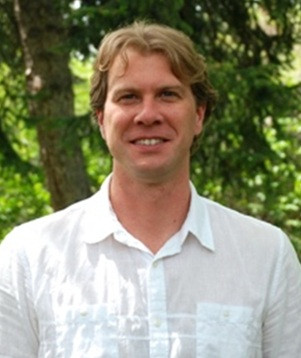
Prof. Yannick J. Bomble
National Laboratory of the Rockies, USA
Title: Derisking cell free conversion platforms for the production of fuels and chemicals
Yannick Bomble, Ph.D. is a distinguished principal scientist and research group manager – NREL. Yannick joined the National Renewable Energy Laboratory in 2008. His team is multidisciplinary and has historically focused on the characterization/engineering of biomass degrading and metabolic enzymes to improve the production of biofuels and bioproducts in thermophiles. Lately, his research has focused more on enabling cell free biocatalysis wherein enzyme cascades operate in the absence of cellular constraints. His team is working on addressing the biggest challenges standing in the way of cost competitive production of fuels and bioproducts using this approach which he hopes will help derisk these technologies and further industrial adoption for biomanufacturing. He received his Ph.D. in Chemical Physics from the University of Texas at Austin (2006) and conducted his postdoctoral work in Computational Biology at the Scripps Research Institute in La Jolla, California (2007). Prior to this he obtained a B.S in Physics and Chemistry from the Universite de Lille (France) (2001) after two years of Mathématiques Superieures and Mathématiques Speciales at the Lycée Faidherbe in Lille (France).
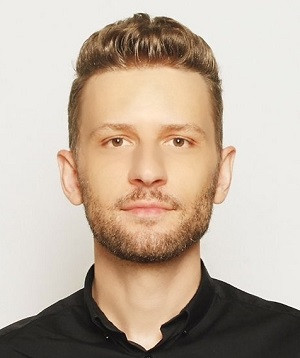
Dr. Marin Ugrina
University of Split, Croatia
Title: Green and sustainable strategies for mercury remediation: valorization of eco-friendly natural materials and agro-industrial waste biomass as potential low-cost biosorbents
Marin Ugrina, PhD is an Associate Professor and Senior Research Associate in the field of Environmental Engineering at the Department of Environmental Engineering, Faculty of Chemistry and Technology, University of Split, Croatia. He received his Master's degree in Chemical Technology in 2008 and earned his PhD in Chemical Engineering (Environmental Engineering) from the University of Split in 2014. Since joining the Faculty of Chemistry and Technology in 2009, he has continuously advanced through academic and research positions. Throughout his career he has combined scientific research with university teaching, supervising undergraduate and graduate students while actively participating in the development of higher education and international scientific cooperation.
He has more than fifteen years of experience in research and higher education in the fields of chemical engineering, environmental engineering, and sustainable environmental technologies. His research focuses on environmental engineering, wastewater treatment, the remediation of heavy-metal-contaminated water and soil, sorption and biosorption processes, and the application of natural and modified zeolites as well as biosorbents.
Marin Ugrina has participated in numerous national and international research projects and served as the principal investigator of the two Croatian–Slovenian bilateral research project on natural modified sorbents for mercury-contaminated environmental remediation. His work has been carried out in close collaboration with research institutions in Slovenia, Italy, Poland, Germany, and Serbia, providing him with substantial international research experience. He has authored numerous peer-reviewed scientific publications and conference papers in the fields of environmental engineering, adsorption and biosorption, sustainable water treatment, and environmental remediation. He serves as Guest Editor and Editorial Board member of international scientific journals.
Alongside his research activities, Marin Ugrina is actively involved in academic leadership and quality assurance. He has served as Chair of the Faculty Quality Enhancement Committee since 2019. He is a member of the International Natural Zeolite Association (INZA), the Croatian Zeolite Association, and the Association of Chemical Engineers and Technologists.
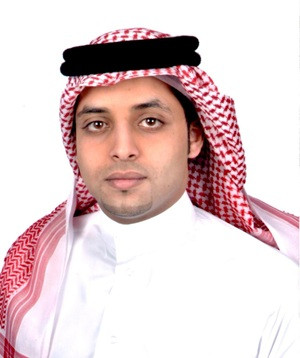
Dr. Abdulaziz Saud Fakhouri
College of Applied Medical Sciences, Saudi Arabia
Title: To be confirmed
Dr. Abdulaziz earned his bachelor’s degree from the Biomedical Technology Department at King Saud University (KSU), followed by his master’s and Ph.D. from the Biomedical Engineering Department at The Ohio State University. Currently, he is an Assistant Professor in the Biomedical Technology Department at the College of Applied Medical Sciences (CAMS) and the Deputy Director of Scientific Affairs at the Center of Excellence in Biotechnology Research at King Saud University (KSU). Also, he is an arbitrator of medical device qualifications for the Saudi Commission for Health Specialties. He previously worked as a Field Service Engineer for GE Healthcare. He also worked as the head of the Innovation Unit at CAMS, and later as the Vice Head of the Medical Technologies Innovation Unit at KSU. He also worked as a consultant for the Saudi Authority for Intellectual Property and for Yood Trading Company. He is also a certified trainer at Mawhiba for gifted students. Abdulaziz’s research interests focus on solving problems through innovative, patentable, and commercially viable biomedical products. Moreover, he is interested in innovation education, medical device design, 3D Bioprinting, biosensors development, cell and tissue engineering, and cancer research.
Prof. Martin von Bergen
Helmholtz-Centre for Environmental Research-UFZ GmbH, Germany
Title: Molecular and species-resolved analysis of metabolic interaction in the human intestinal microbiome
Will update soon.
Prof. Jingwei Xie
University of Nebraska Medical Center, USA
Title: Emerging Nanofiber Materials for Biomedical Applications
Will update soon.
Dr. Jason Beckwith
BioTalent, UK
Title: Engineering Human Capability for AI-Enabled Biotechnology
Dr Jason Beckwith, PhD, MBA, DBA, is the founder and architect of Talent Science and Organisational Workforce Physics, Senior Vice President of Talent Science and Predictive Analytics at BioTalent, and a Leader in Residence at Leeds University Business School.
He developed Talent Science and Workforce Physics as applied disciplines for measuring and predicting how workforce capability, knowledge flow, organisational design and leadership dependency affect execution and enterprise performance. His work moves workforce strategy beyond headcount, engagement and conventional skills inventories by connecting workforce variables directly to operational, financial and strategic outcomes.
Dr Beckwith's research combines complexity science, organisational network analysis, Bayesian modelling, Monte Carlo simulation and artificial intelligence. He is the creator of the Talent Efficiency (TE), Biopharma Talent Index (BTI), Knowledge Flow Index (KFI) and Workforce Value-at-Risk (WVaR) frameworks. These models are used to identify capability bottlenecks, quantify execution risk and guide retain, retrain, recruit and automate decisions across biotechnology, pharmaceutical manufacturing, advanced therapies and AI-enabled organisations. Drawing on quantitative research across global biopharma organisations and facilities, together with academic collaborations involving UCL and the University of Dundee, his work has examined the relationship between workforce architecture and measures including productivity, quality performance, programme speed, digital adoption and enterprise value. The research has led to three textbooks and an expanding programme of applied studies in Talent Science, Workforce Physics and Knowledge Physics.
With more than 30 years of international experience across biotechnology, pharmaceuticals, CDMOs and advanced therapies, Dr Beckwith has founded and exited multiple bioscience businesses and advises boards and executive teams on organisational readiness, AI adoption, workforce transformation and growth. He is a regular author, keynote speaker and conference contributor, translating quantitative workforce research into practical methods for improving organisational performance
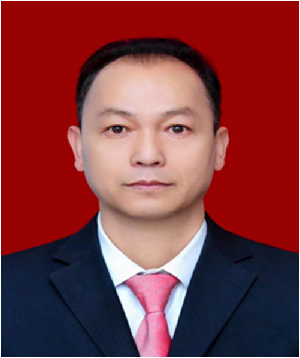
Dr. Zhongsheng Guo
Northwestern A & F University, Yangling, China
Title: Agricultural high-quality development
Zhongsheng Guo obtained his master degree in 2000 and doctor degree in 2004 from the Northwest A& F University, and now, he is a professor in Northwest A& F University, China. His mage is plant ecology and soil and water conservation.He have researched sustainable use of natural resources and the high-quality Agricultural development for a long time, and put forward the theory of resources use limit by plants, the theory of vegetation carrying capacity, the theory of critical period of regulation of plant resource relations and the new theory of soil and water conservation. This is the theoretical basis for high-quality development of forest, grass, agriculture and soil and water conservation. He is the Head of "innovation China" Agricultural high-quality production and industry Service Group.
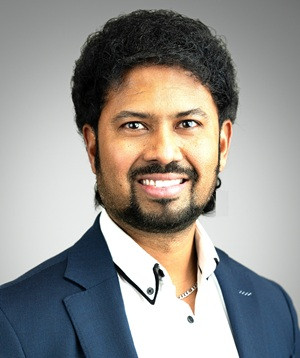
Dr. Rajinikanth Rajagopal
Sherbrooke Research and Development Centre, Canada
Title: Turning Agricultural Waste into Renewable Resources: Technologies Driving the Circular Bioeconomy
Dr. Rajinikanth Rajagopal is a Research Scientist at Agriculture and Agri-Food Canada (AAFC), Sherbrooke Research and Development Centre, where he leads innovative research programs in sustainable agriculture, waste valorization, and circular bioeconomy systems. His work focuses on transforming livestock and agri-food residues into renewable energy and value-added products, contributing to climate change mitigation and resource-efficient farming systems. He earned his Ph.D. in Environmental Engineering through a collaboration between the Indian Institute of Technology Roorkee and the Laboratory for Environmental Biotechnology at INRA, followed by postdoctoral research in France and Singapore. Dr. Rajagopal has authored over 100 peer-reviewed publications (H-index >31) and contributes actively to international research collaborations. He specializes in anaerobic digestion, nutrient recovery, and greenhouse gas mitigation, advancing practical solutions for sustainable and climate-resilient agricultural systems worldwide.
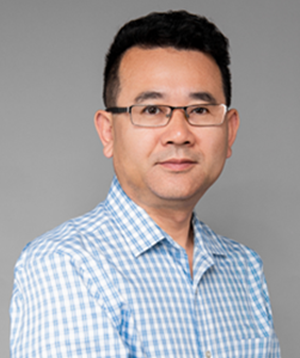
Prof. Zhen Yuan
University of Macau, Macau, China
Title: ROS Responsive Nanodrugs Alleviate Inflammation and Neuronal Apoptosis in Targeted Treatment of Traumatic Brain Injury
Dr. Zhen Yuan is a Professor with Faculty of Health Sciences at the University of Macau and concurrently serves as the Head of the Centre for Cognitive and Brain Sciences with the university. Professor Yuan has achieved a series of internationally recognized in the fields of brain neuroscience and biomedical optics. He has published over 400 high-quality SCI-indexed papers in top journals including Science Advances, Nature Communications, Cell Reports, Cell Reports Physical Sciences, Cell Biomaterials, Research, Microbiome, Translational Psychiatry, Biological Psychiatry, and Molecular Psychiatry, Advanced Materials, Small, Advanced Functional Materials, Nano Letters, Advanced Sciences, ACS Nano, Biomaterials, Nano Micro Letters, Angewandte Chemie International Edition, Theranostics, Optics Letters, and Applied Physics Letters. His Google Scholar H-index is 61, with a total citation of around 13000.
Professor Yuan currently serves on the editorial board of Quantitative Imaging in Medicine and Surgery and Journal of Innovative Optical Health Sciences, and is also a Senior Associate Editor for BMC Medical Imaging and Frontiers in Human Neuroscience. He is a Fellow of the Optical Society of America (OSA) and a Fellow of Vebleo. He holds positions as a Standing Committee Member of the Biomedical Optics Committee of the Chinese Optical Society, Vice President of the Macau Society of Nuclear Medicine and Molecular Imaging, a Council Member of the Chinese Society for Anatomical Sciences, and a Council Member of the Chinese Neuroscience Society. He has received the China's Top Optics Research Award, led 18 national and provincial-level projects, and has filed/been granted 10 international and domestic invention patents.
Prof. Shang-Ming Zhou
University of Plymouth, UK
Title: Advancing Bladder Cancer Screening with Electronic Health Records Through Advanced Machine Learning Techniques
Dr. Shang-Ming Zhou is a distinguished Professor in eHealth at the University of Plymouth, UK, where he serves as the Associate Head of School (Research), Chair of Operational Artificial Intelligence Group, and Deputy Director of the Centre for Health Technology in the Faculty of Health: Medicine, Dentistry and Human Sciences.

Dr. Zhou's work focuses on AI-driven personalized medicine, machine learning in health and care, health informatics, health data science, disease phenotyping, risk stratification, polypharmacy, multimorbidity, and public health research. His research on integrating information from multiple sources through advanced methods of type-1 and type-2 OWA operators has paved the way for data integration and aggregation under uncertain environments. He leads different projects, advancing healthcare data analytics for patient-centric innovations. He has also been awarded externally funded grants worth over £10 millions. Dr Zhou is the member of Editorial Board for 15 international journals.
Research Interests:

AI-driven personalized medicine, machine learning in health and care, health informatics, health data science, disease phenotyping, risk stratification, polypharmacy, multimorbidity, and public health research.
Prof. Li Ye
Macau University of Science and Technology, China
Title: Nanobody Platform Targeting Core Mediators of Tumor Microenvironment Normalization
Professor Li Ye is a PhD supervisor and Programme Director at the School of Pharmacy, Macau University of Science and Technology (MUST). She earned her PhD in Medicinal Chemistry from Fudan University and worked at Fudan before joining MUST in 2022. Her research focuses on biopharmaceutical R&D, especially Antibody Fusion Proteins, Nanobodies and Antibody drug Conjugates for immunotherapy. She has led and participated in over ten research projects funded by national, ministerial, municipal and Macau funding bodies. Her work has appeared in journals such as *J. Hematol. Oncol.*, *Acta Pharmaceutica Sinica B*, *Nature* and *Asian J. Pharm. Sci.*, and she has contributed to developing multiple biopharmaceuticals with clinical approvals or patents.